Survive transit
Protect the detachable habitat.
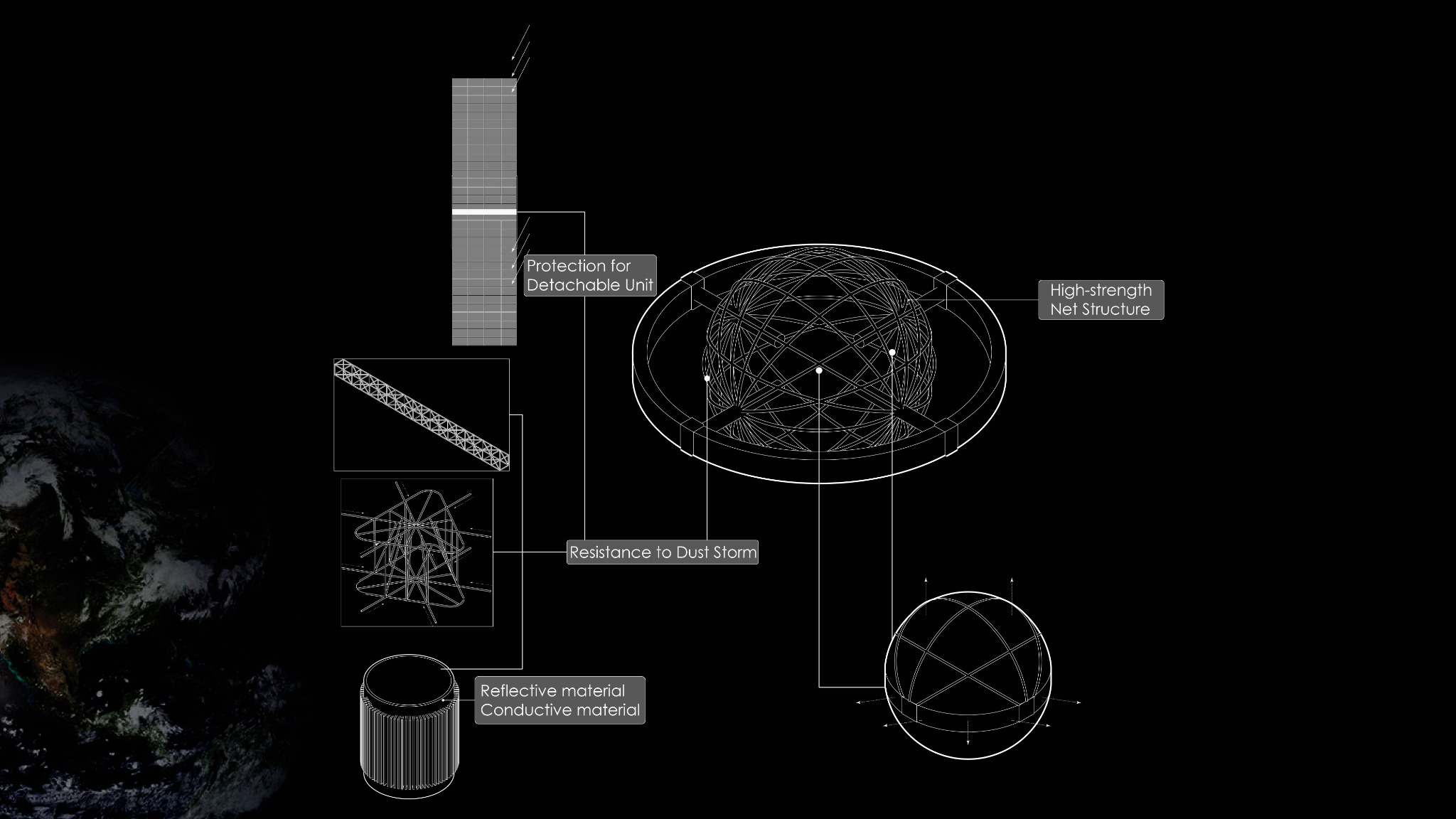
A protective layer and high-strength net respond to orbital exposure and Martian dust before the module becomes architecture.
 Open full image ↗
One object. Two lives.
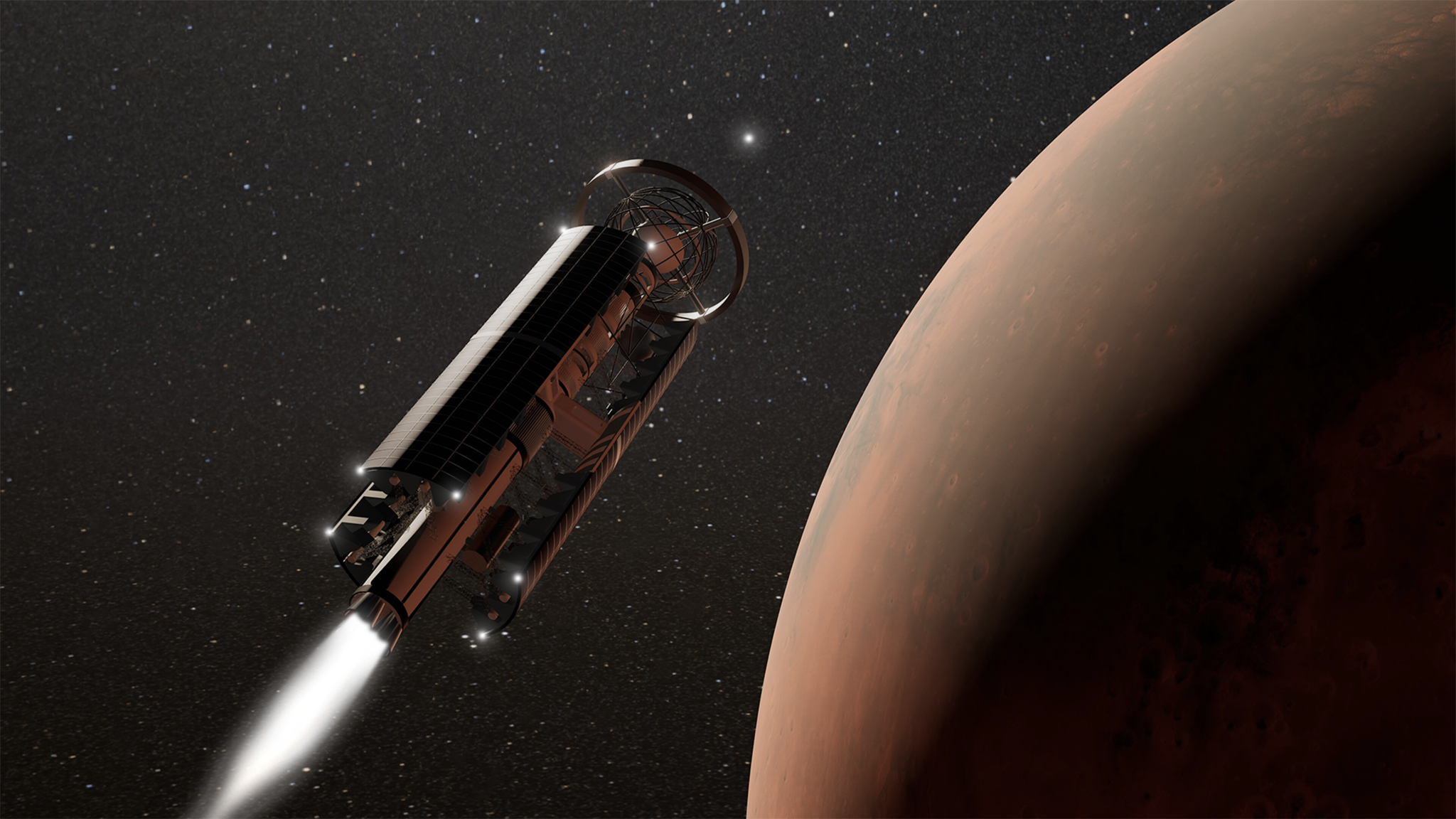
The journey does not end at landing. It changes state.
Selected technical studies
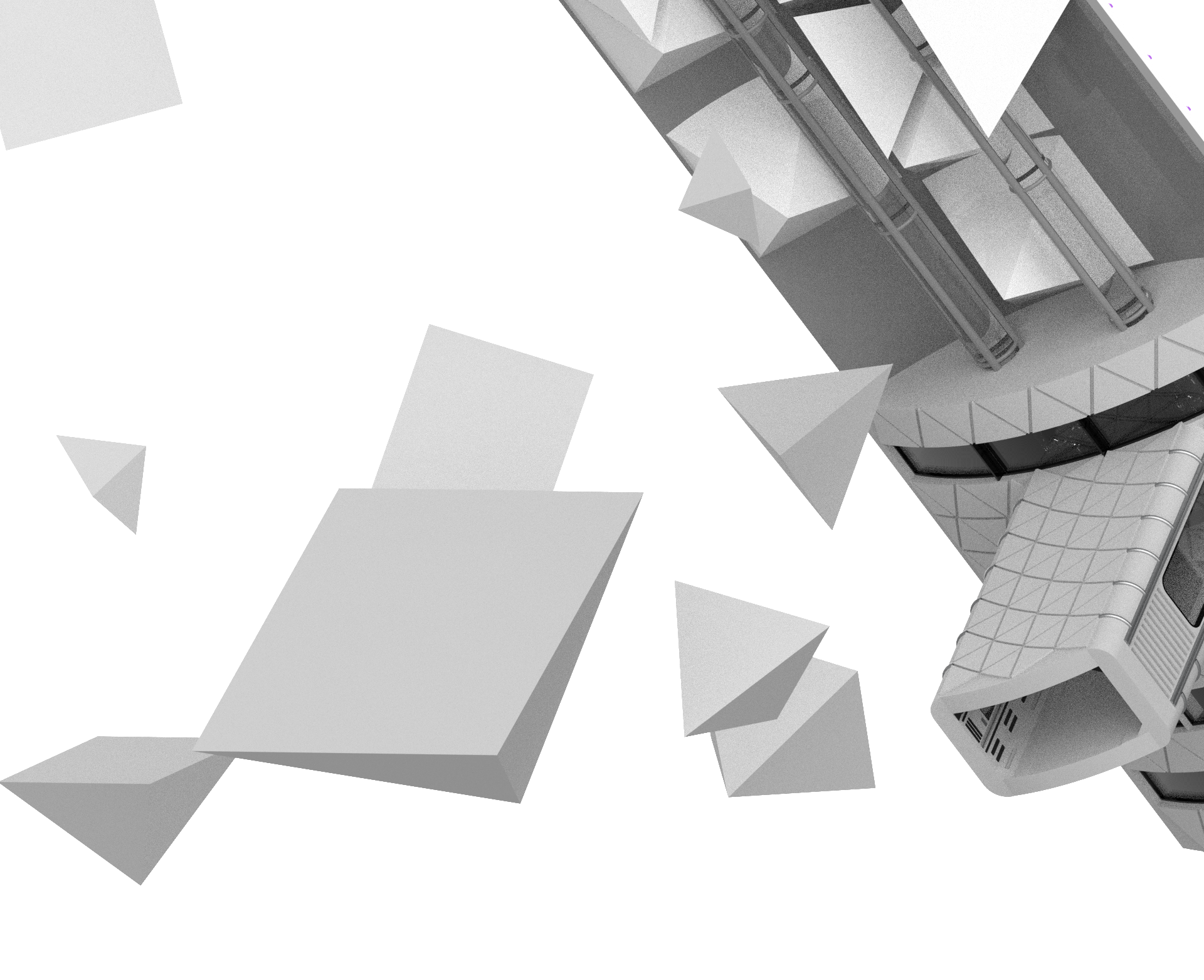
Three studies follow the same object through protection, release and occupation. They establish that a system exists without resolving every mechanism here.
A protective layer and high-strength net respond to orbital exposure and Martian dust before the module becomes architecture.
Open full image ↗
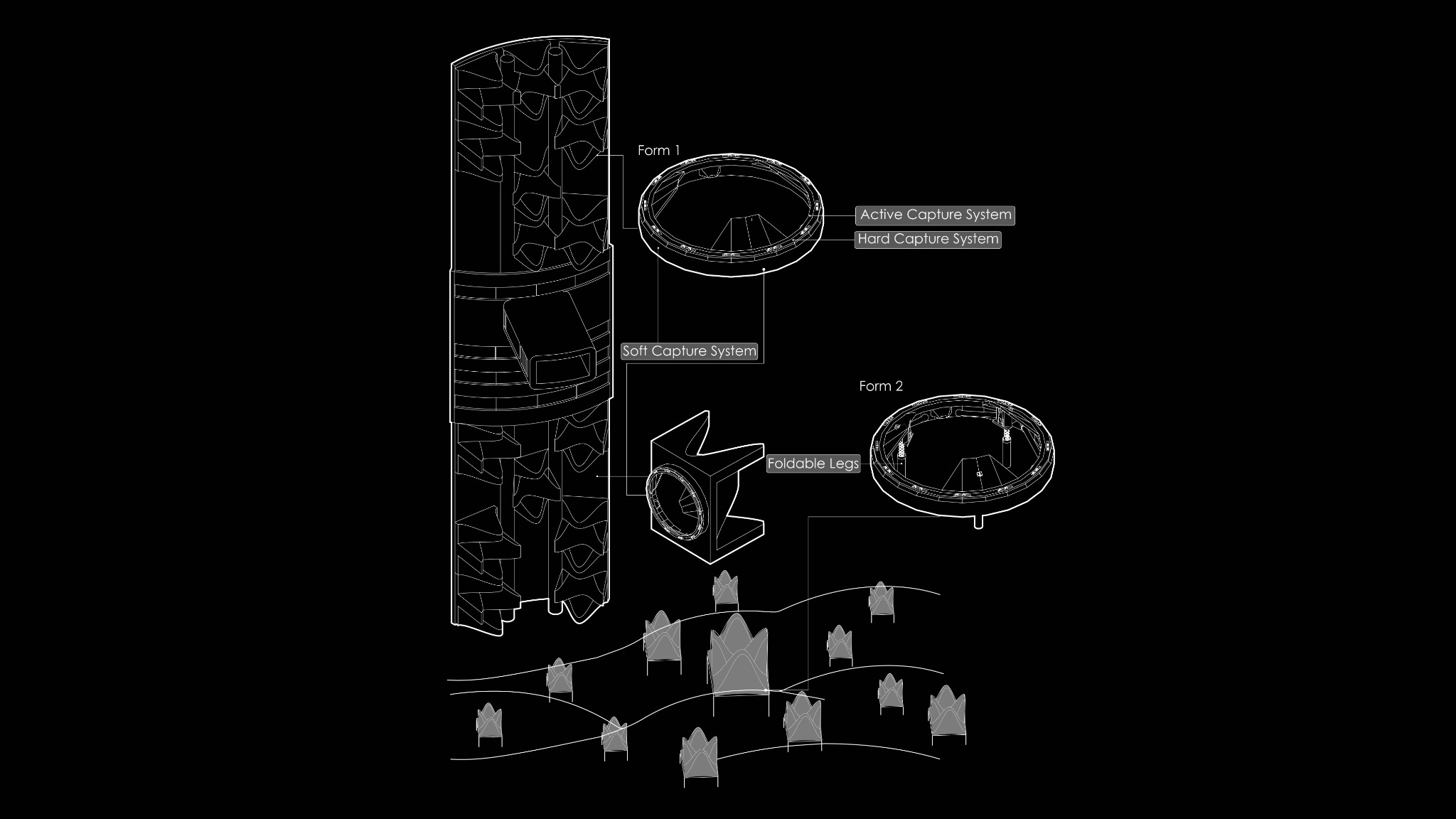
Active, hard and soft capture systems manage transfer. Foldable legs allow the released module to meet the surface.
 Open full image ↗
Soil, anchoring, stability, assembly, ventilation and resource distribution turn a landed object into a settlement system.
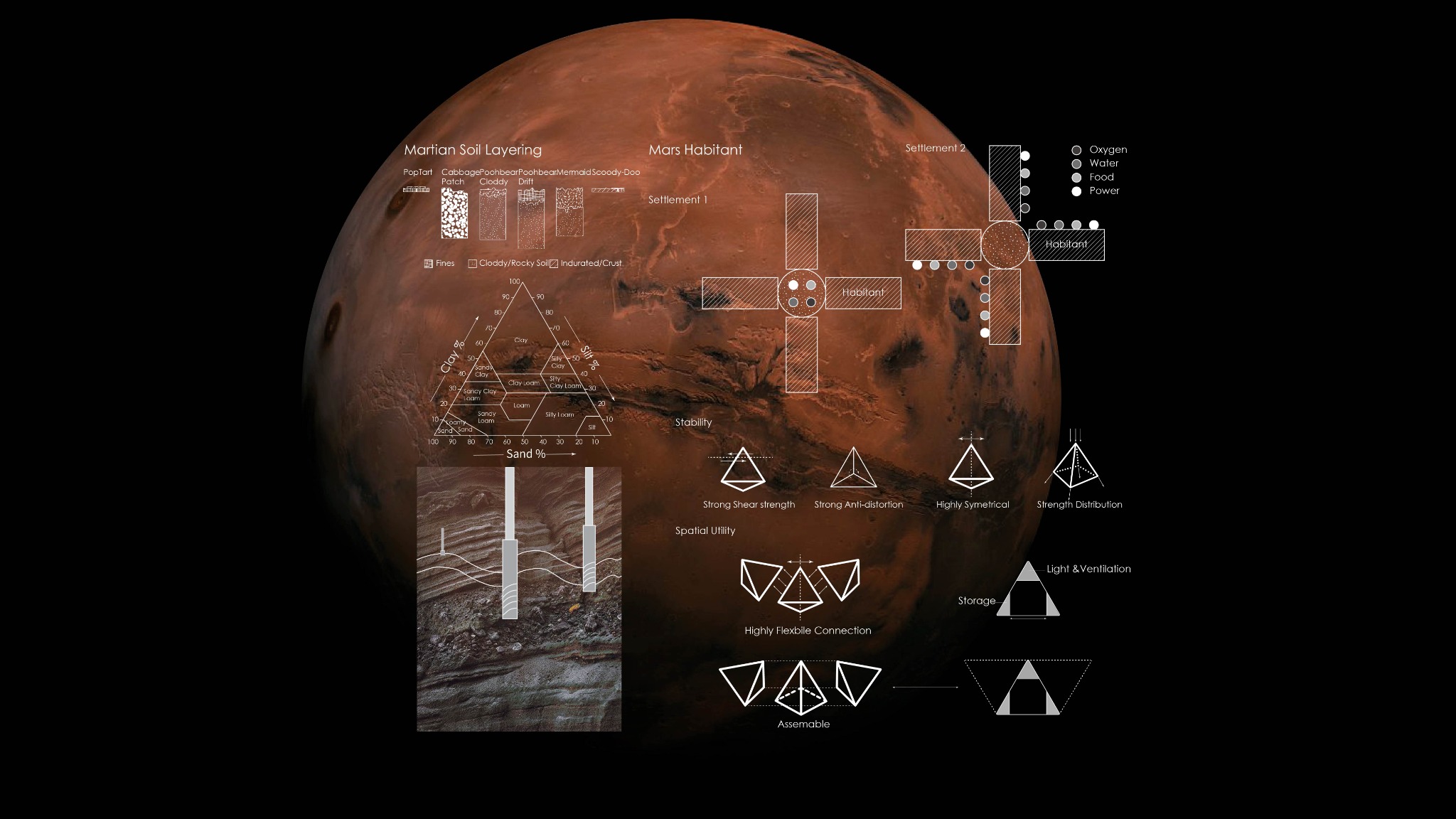 Open full image ↗
The object has reached the surface. The next question is scale.